Showing posts with label Dept Update. Show all posts

Sunday, June 20, 2021

Get your JAB ASAP!!!

There is a "Long way to go". This was one of the headlines in an article that appeared in The Hindu today. The vaccination rates in our country is still going slow. There may be multiple reasons for that, including availability, the large population and so on. 

It is absolutely evident that only Vaccines can get us out of this pandemic as demonstrated by some countries. Now that vaccination for 18-44 age group is underway, the age group which is more representative of students in our campus, it is time for everyone to get vaccinated. 

Let us all keep our apprehensions aside and use the next best opportunity to get vaccinated and get rid of this pandemic as early as possible. We should also remember the fact that one will be safe only if everyone around us is also vaccinated. Let us encourage everyone around us also to get vaccinated as early as possible!! 

It is more than a year we are stuck at home, everyone dearly misses the campus days. We can get back to our campus only if we stand together and get ourselves vaccinated. So, guys, get your JAB as early as Possible!!


Monday, May 31, 2021

Welcome Dr. Jiji Antony as new Head of the Department

Very happy to announce that we have a new head of the department for Civil Engineering, Dr. Jiji Antony. She will be taking charge from 01 June 2021 onwards. We stand together to support our dear Jiji miss in this new assignment. 

Sunday, May 30, 2021

Farewell to Principal

Dr. Geroge Issac, our current Principal is bidding farewell to FISAT. After his tenure of 6 years, he is retiring on 31 May 2021. He joined FISAT back in 2015. Dr. George Issac has made significant contributions to the Institution over these years. He headed FISAT for the two major accreditation processes, NAAC and NBA. Needless to say, FISAT came out very successful in both these accreditations. He was instrumental in bringing out many changes in the institution, mainly in the office, streamlining its functions, digitising payments and so on. He would listen, and help arrive at decisions giving every consideration to the matter presented. 

Dr. George Issac has been a well wisher for the Department of Civil Engineering. He had shown great interest in all the activities of the department, encouraged and supported us in all the curricular and co-curricular activities. His support for conducting NIRMAN, SECON will be remembered. 

A farewell meeting was arranged on behalf of the staff members on Saturday, 29 May 2021. Only a handful could attend the event in person. The program was streamed online - the new normal. Members of FISAT family shared their respect and appreciation for all his contributions to the Institution. A great human being who respects the views of others, even if it is critical. 

The department wishes the very best for a healthy and peaceful retired life to our beloved Principal.

Friday, April 30, 2021

Retirement of Dr. Sunny Kuriakose

Dr. Sunny Kuriakose, Dean, is retiring today, 30 April 202 from our campus. He was an integral part of the Science and Humanities Department. Despite having many administrative responsibilities, he pursued his interest in academics and has guided and produced many PhDs. Being the coordinator, he played a key role in NAAC and NBA accreditation of the campus. The way he connected mathematics to real problems in engineering has been appreciated by many. He was also a great public speaker and has a unique ability to build teams with people of heterogeneous nature.  He will be remembered as someone who would actively participate in every activity of the campus, from sports meet to arts fest.. the energy and enthusiasm he carried was indeed a motivation for many. He was a great support for the department of Civil Engineering and has guided us in many departmental actives. The department wishes Dr. Sunny Kuriakose a healthy and peaceful retirement life.


Tuesday, March 16, 2021

One more online semester 😔

Who would have thought one year back, that COVID 19 will last this long? The worst we imagined was that the 2020 graduating batch will have to leave the campus without the usual festivities and farewell parties and 2021 will be back on track. Many were optimistic that the 2021 batch will have formal classes and campus will get back to normal. 

As days passed we realised that it will take more time, but, we never expected that the 2021 graduates will also go through the same story.

Today, 16 March, marked the first day of online classes for the S8, the final semester of the 2021 batch. Teachers and students were back online - looking face to face through a screen. One month of contact classes is proposed by KTU during the month of June - thats the hope for now!!!

Saturday, February 27, 2021

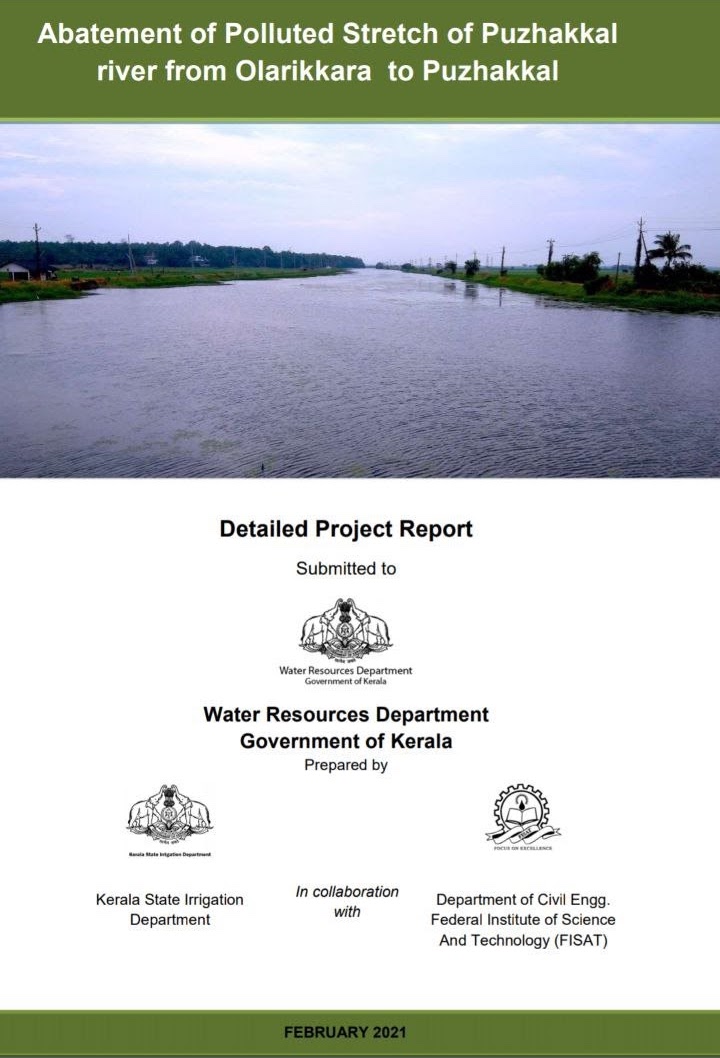
The Puzhakkal DPR

And, we submitted the DPR of Puzhakkal river, today. It was a great team effort. Thank you team!!


Saturday, February 13, 2021

Abatement Drive - Puzhakkal River, Thrissur

"Ninety seven percent of the world water cover is salty and definitely not potable and out of the three percent, two percent is frozen as ice caps in the poles and the interesting and sad fact is that all of humanity till date have been depending on that meagre one percent of freshwater. It is this one percent that we abuse and use like there’s no tomorrow. Water bodies are humanity’s lifeline and with the above scary statistics in consideration we might all reach day zero in the near future"

The kind of feeling we all have when our cell phones is at one percent charge is disturbing, let that concern be reflected in saving this useful one percent for a possible future.


Pollution abatement project, a joint venture of the Water Resource Department,  Government of Kerala in association with  engineering colleges are working towards identifying various polluted rivers, their water quality testing, pollution abatement and future aspects regarding keeping its sanctity. FISAT Angamaly teamed up with the Irrigation Department, Thrissur to identify the pollution levels in the Puzhakal river. Considering the emergency of the matter, weekly meetings of officials were held to discuss the strategy and to know the gravity of the situation. One seminar was specifically held for all the officials and participating students across the state to enlighten everyone about the water testing and related procedures and also gave an insight into this project.

This blog is our experience of being a part of this wonderful project.


DAY-1 (23rd January 2021)

So with all the base arrangements in place, each team across the state set out to work. Phase one was reconnaissance, to determine the stretches of each river and the testing points which will later be put to test. FISAT civil engineering department faculty and students set out for this task on 23 January 2021. It was a fun and daunting task to walk in the scorching afternoon heat along long stretches of the river. The whole team was split into smaller ones and later broke into examining different stretches. Google My maps was used to mark different sampling points and all the teams took pictures which were all added to the whatsapp group made for the sake of this project. After this day, reconnaissance of the various sampling points was done. The team had lunch after a tiring day and curtain was down for the day’s work.

DAY-2 (2nd February 2021)

The second phase of the tie up project between the WRD govt of kerala and dept of civil engineering fisat started. The day was full of surprises that had both ups and downs as a civil engineering student and also as an individual. I was so excited to visit the site to get a feel about how the field visits and field works in civil engineering dept requires. We had a complete path shown by our HOD and faculty members on how to proceed and what all factors to take care about. Jawahar sir, an environmental engineer was the lead mentor who knew the process in depth and also gave us all technical instructions from A-Z. Initially it was planned to collect samples from 5 different pre-defined spots for the versatility of the conditions and also to get a definitive idea on what all pollutants and chemical compositions are present in the river water. The joint visit was conducted by the executive engineer of the irrigation dept of Thrissur Dist. The visit started after a brief primary discussion with the concerned officials.The visit gave us immense idea on how the practical world works and what measures are required to the smooth functioning of the river systems. There was an accompanying officer from the irrigation department who actively took part in the sample collection process.

Spot 1 (MLA Road).

This  spot was the very first spot for the sample collection of the river water and it was successfully done by a very positive spirit which also was a motivation for us. The Colour of the river water varied from grey to black.

Spot 2 (Kuringkal canal).

This was the second spot of the venture and the colour of the river water was pale yellow and there was no odour.


Spot 3 (Behind Food corp. INDIA)

This was the last spot for the sample collection for the day as we were running behind the schedule.

The colour of the river again varied from grey to blackish with a lot of floating object and there was both ammoniacal and rotten egg smell from the sample. 

After the successful collection of 3 samples from the above mentioned spots, now it was time for having lunch. After a very satisfying lunch it was decided that the remaining spot sample will be collected in the coming session as there was a time constraint so we submitted the collected samples in the Lab and returned to our campus.


DAY-3 (6th February)

A bigger task was in hand this time, seven points had to be sampled today and we had only one day. Comparing last day’s progress we felt that was near to being impossible, but we had the a clear idea and experience of the procedures so we could keep cool throughout the visit and speed up the process.  This time there was three students and two faculty from civil department. We packed all the necessary tools for sampling and loaded that to two cars. Now the surprising part of the journey was that our HOD just gave the keys of his car and told “ DRIVE”. Literally we didn’t see that coming and hence we three students took turns and took the wheel. This part really made our day but the main part of the project was yet to be done. We went straight to the Thrissur irrigation dept for further directives for the day and zoooom we went to the prescribed points.

Sampling was seamless and this time we never felt like losing track or making mistakes hence we went from point to point in no time with less errors. This proved the worth of experience be it any domain.

We completed five points before having lunch which was indeed a great achievement for all and then drove back to the irrigation office to give the samples since we ran out of space to store. 

Lunch was at combonation a restaurant famous for providing food in earthern cutlery. Had a wholesome meal and set off to the last two spots left for the day. The sixth spot was situated in a scenic setting but taking the sample was a daunting task. Like a saviour, a fisherman named GOPI came into the scene and helped us to get the required amount of water from the river. A pure coincidence that saved time and the process.

The final sample was taken from the puzhakal bridge which brought down the curtain to this streak of sampling. We all felt a sense of calmness and victory that engulfed us all of a sudden. With a free spirit we all went back to the irrigation office to hand over the final samples.


Unni sir took a victory selfie to mark the end of a tiring and momentous day. Had some cool drinks and set the car engines straight back to college. Looking back into the water qualities we saw in the process, the quality kept increasing when we went to the outskirts of Thrissur city which is not a surprise. Much of this was semi clean potable water. On the way back we stopped for some snacks and drink on the highway and on the way to college had some humbling chit chat with Unni sir. Reached college at 8 pm and finally handed over the car over to Unni sir at last. Here are the short brief of all the samples taken.


Spot 4

This was the starting point of the second phase of the sample collecting process. In this very spot the the river water was clear and odourless.

Spot 5

At this spot the river water was stagnant and there was odour of H2s in the very sample.

Spot 6

At this point the water was slow flowing and not stagnant. The water was clear and one point to be noted that there was few particles floating in it and it exhibited organic decaying smell.

Spot 7

The river water at this point was flowing and it had no odour. It had aquatic life and it was clean and had moderate turbide.

Spot 8

This spot had a few challenges waiting for us as the bridge was quite high and unni sir had to sacrifice his spectacles in the collection process but after few moments we were able to collect water from the source and it had algae growth, turbid water, floating objects and the water was flowing.

Spot 9

This place was the place where collecting the sample from the middle of the river seemed almost impossible then gopi the fisherman came forward to help us with his boat, keeping his usual business at a halt for few minutes and helped us collecting the sample and yes that was a success. The water was flowing, it supported aquatic life, the water was clear and it also attracted birds.

Spot 10 

This spot was the last spot for the project and after collecting the sample from there we along with Unni sir and Jawahar sir went to the irrigation dept to submit the samples for testing. The stretch had oil, invasive aquatic plantation, floating materials, and the water was stagnant.


Gokul Ajith, Sinchan Dutta, S3 CE, FISAT

Tuesday, February 2, 2021

The Mango Tree

This is the season when mangoes bloom, you can see a lot of them around. The campus does have a few mango trees. This one is in between the decennial block and the administrative block, near the seminar hall - and behind the library. There will be lot of eyes on these mangoes when we used to have classes. The tree must be missing it now. 🌳🌳🌳😁
 

Monday, January 11, 2021

Puzhakkal river - a journey to remember

Today, I had an opportunity to visit the basin of Puzhakkal river, under the tie up project between the Water Resources Department, Govt of Kerala and Department of Civil Engineering, FISAT. The day was full of surprises that had both ups and downs as an engineer and an individual. I was so happy to meet one of my early day mentors as a teacher at the Irrigation Department Office. We had an elaborate discussion as to how to move forward with the work that has been undertaken. 

For the uninitiated, we are working on the Project for Pollution Abatement of Rivers in Kerala. The rivers are those ear marked as the most polluted by the CPCB and the National Green Tribunal of India. Even though a priority five river, Puzhakkal river being one of the largest source of irrigation to some 13,000 hectares of kole farming needs urgent retribution as a clean river. 


A joint site visit was conducted by the Executive Engineer of the Irrigation Department at Thrissur who is also the nodal officer for the program and Unni sir and myself from the college. 

An hour’s primary discussion with the members from the Irrigation Department, Hydrology division and KERI gave us a great insight into the polluted stretches of the river, potential sources of pollution in the river.  


The site visit ensued which had the basic purpose of getting a feel of the issues faced, major areas to be covered while data collection and sampling.  It gave us a grim picture of the river which feeds acres of kole farm lands in the district of Thrissur. The river is fed by a lot of tributaries and small streams and canals. Some of the important tributaries were found to be septic at points.

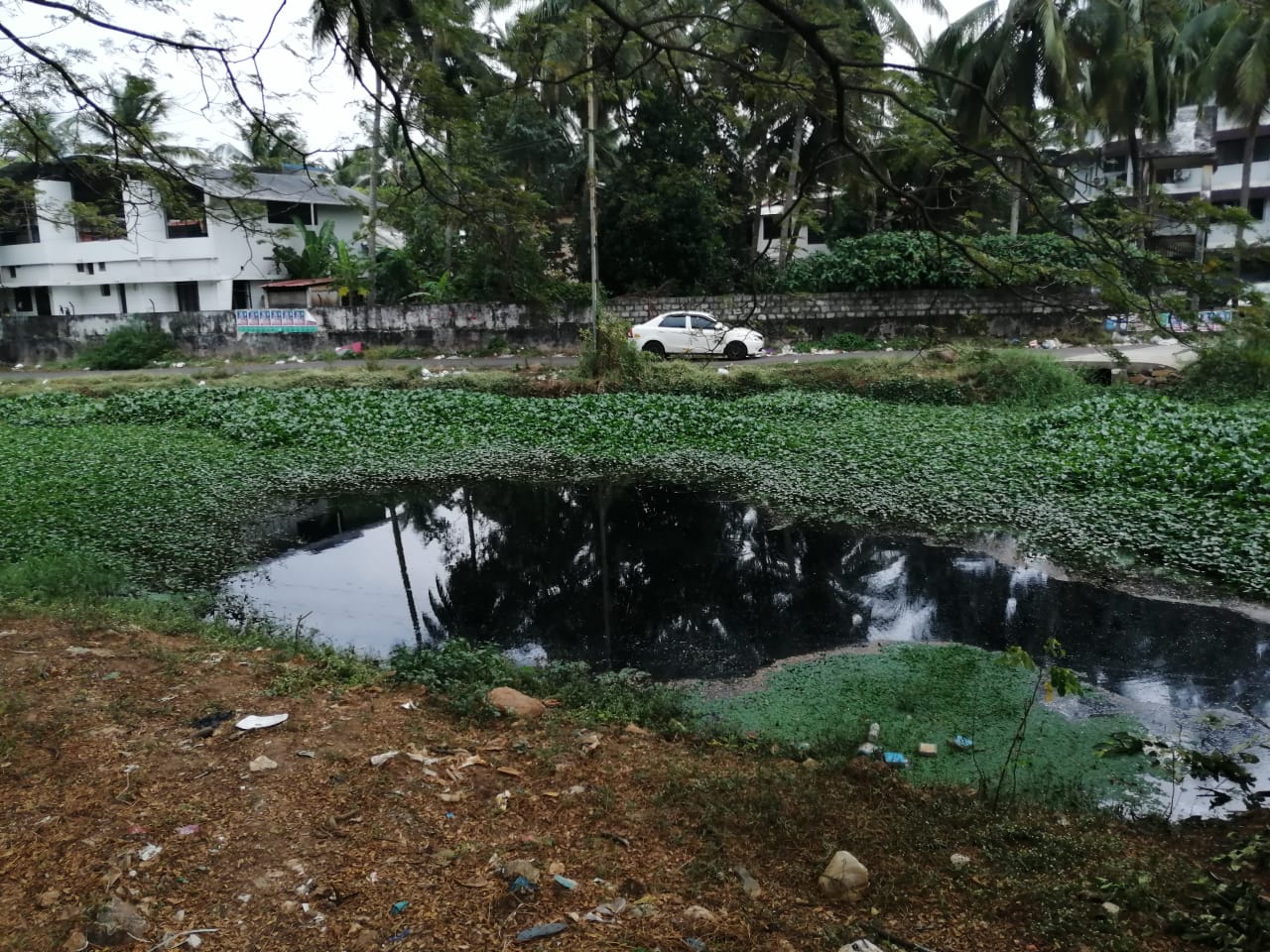
The residential areas, hospitals, commercial complexes within the corporation limit of Thrissur were found to have a deep impact on the ecology of the river. A total disruption of the ecosystem was evident at places. There was putrefying odor at more than one location in the canals and tributaries which evidently has been polluting the river. The presence of organic loading was visible. Water was brackish and no sign of fish life was available. 


The biggest concern to the upkeep of the river is the tendency of people to dispose off Solid waste generated directly into the canals which end up at the river. Also, the disposal of septic waste, treated and untreated sewage from residential and commercial units, hospitals and other public entities like Thrissur Railway Station, KSRTC bus stand etc. was found to be affecting the quality of otherwise pristine canals that feed the river. 

It will be a tough task rejuvenating the river without the support of the population. All work that we would be putting into the sampling, testing and planning pollution abatement techniques will be ineffective if the people are unwilling to change.

Upkeep of the quality of the river water is not just about sustainability of the river, kole farms but also about rejuvenation of flora and fauna that have been lost or on the brink of extinction in the river basin.

Jawahar Saud
Assistant Professor
Department of Civil Engineering


Tuesday, January 5, 2021

Teaching with a "Mask"

First things first. The satisfaction you get from teaching in a classroom is unmatched, even if it is "masked". It is almost after one year that I could see the response in the eyes of the students. It is the most rewarding experience for a teacher. So excited and concerned at the same time.

I am teaching Design of Steel Structures this year and my experience with this contact class has been much finer than expected. The students seemed a bit restrained initially, only one person in a bench, confused. Once the class kicked off, they started responding well. They responded positively, the classic head shakes, followed by occasional replies. I could see them missing the peer interaction though. Normally they help each other learn while doing numerical problems in class. Having one student per bench was an impediment for that. The speed at which they were grasping was also on the higher side - this is normally observed in revision classes when we conduct repeat session for topics that are discussed once. The online classes might have given them the basic understanding and the contact classes are probably bringing in more clarity to that.  It looked almost normal for the students, except for the mask. Of course the normal things in a class were observed - chatting in between, sharing books, the ringing mobile, checking the calculation with a neighbour and the unavoidable dozing-off.


My "masked" class!!


Yes, it is tough to lecture with a mask. The extra strain to increase the volume adds to the problem. The front masked portion of the mouth gets warmer and fills with spit and sweat 😢 and is very disgusting. One hour of class drains the complete energy and after a while, there will be a strong urge to remove it and get some fresh air. The thrill to be back in class overcomes all these discomforts. But, then again, I am not sure how long this will last 😉. 

Overall, the first class gave the impression that contact classes are beneficial. Eager to see how this evolves. Hope everything goes well.

Unni Kartha G
Professor & Head
Dept of Civil Engg.

Saturday, January 2, 2021

Taking the next step forward - Contact Classes

Welcome final years to the campus!!! We are waiting for you!!!

This is the first challenge the campus is taking up in 2021. Covid-19 outbreak and lockdown that followed forced the campus to close last year in the month of March. Except a few university exams, the campus was literally sleeping - not hosting any classes for 9 looong months. Though the classes were happening online, the campus was not live, we missed the energy of the students and their activities. It was indeed a great loss, one lost semester!!😓

Things are slowly changing. As per the instructions of the Govt and KTU, the contact classes are beginning on Monday, 4 January 2021. This is a very precarious step - opening up the college and get the students back on campus. As of now, only final year students are allowed in - for two week contact classes. We hope to bridge the missed lab sessions and also to fill the gap of some courses which badly need an instructor to assist in the learning process.

The campus has geared up. The planning and preparations are complete. The classes, labs and hostels are sanitised, time table published, guidelines issued and students are instructed on how to take care of themselves in the campus during the contact classes. We are trying our best to ensure the safety of the students and faculty members. We have good confidence in the FISAT fraternity and certain that nothing goes wrong 💪 We will be successful in meeting the objectives of the contact classes without any glitches.

Welcome guys, let us take this small step forward, together. Lest us follow the basic protocols we learned last year!


Thursday, December 31, 2020

The first post - New year - New beginning!!

This is the first post, Yes, this is a new year resolution!!

We are creating a blog for our department - to keep the Civil family of FISAT, closer.  Let this blog connect you  to the department, be the one stop to know what is happening.  We will keep this live with articles from the people in campus. Subscribe to it to get updates!!

Wish you all a very happy new year. Let the new year bring more joy and happiness to all of you.